Part of why I love getting in the van and going off grid is that I'm away from internet connectivity. That said, Starlink had a sale on their Mini product, and its specs presented a compelling value proposition. It's compact, mounts easily on the roof, and consumes 20-40 watts running on 12V (more on that later). What tipped the scales for me was their "Roam 50" plan, which gets you 50 GB for $50/month. You can pause or resume on demand. With remote work from the van in mind, plus my nerding out on communication systems, I went for it.
The other thing about me and tech is that I'm lazy. Which is to say, if there is something that is fussy, requires repetitive setup/breakdown, or up keep, I tend to not use it. I also like the right amount of configurability to give me options, though I know I will default 99% of the time to the low friction option.
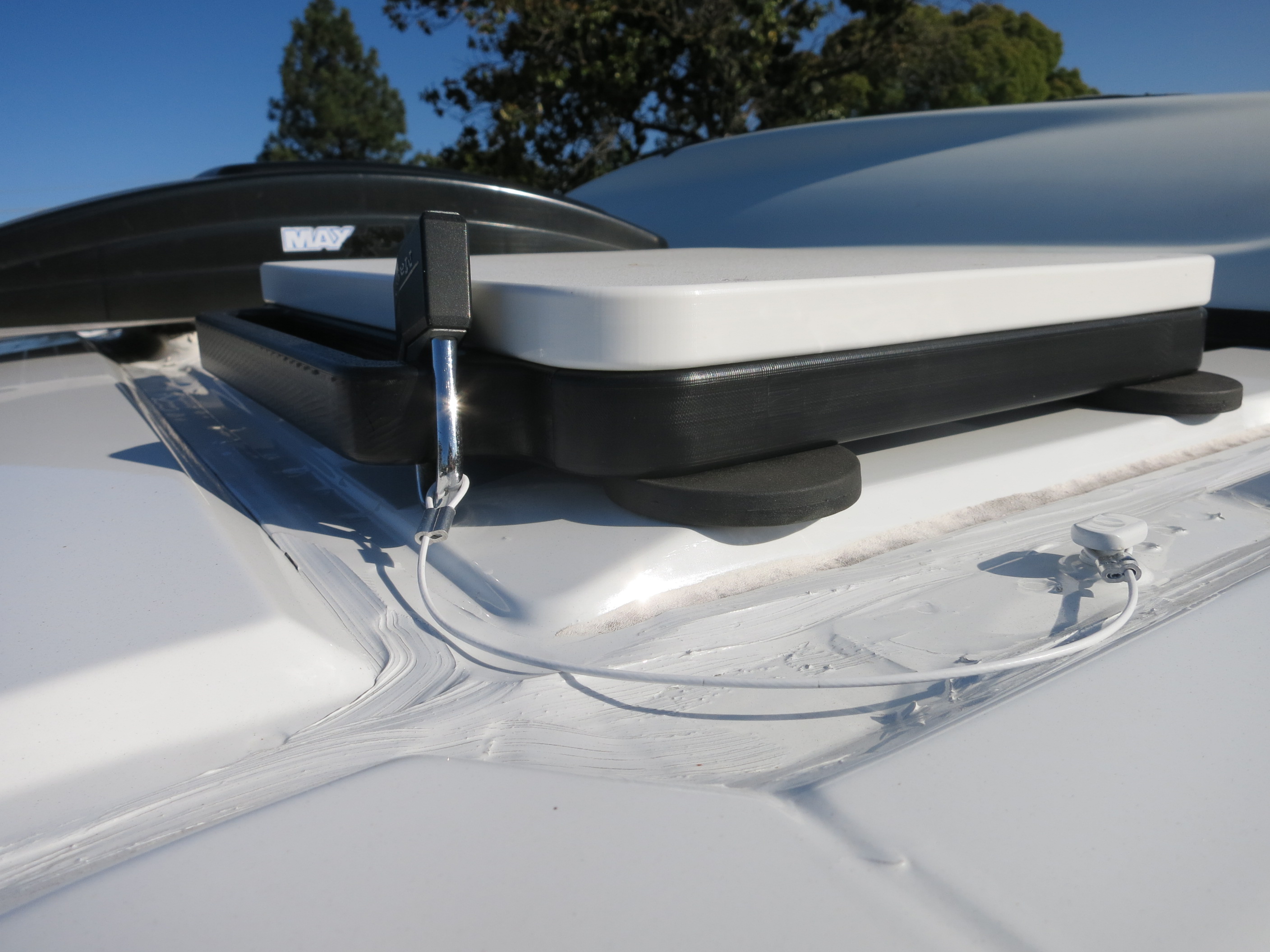
So behold my Starlink Mini semi-permanent van install. It now lives on the roof of my van, hardwired into the 12V house battery system. I also wanted the option to remove it and power it from an alternate placement easily. The case and magnetic mount from Veritas Vans makes physically moving the unit around easy enough. To provide power options, I developed the following solution which provides another power port on the van's rear bumper. I wrote the following to document the circuit:
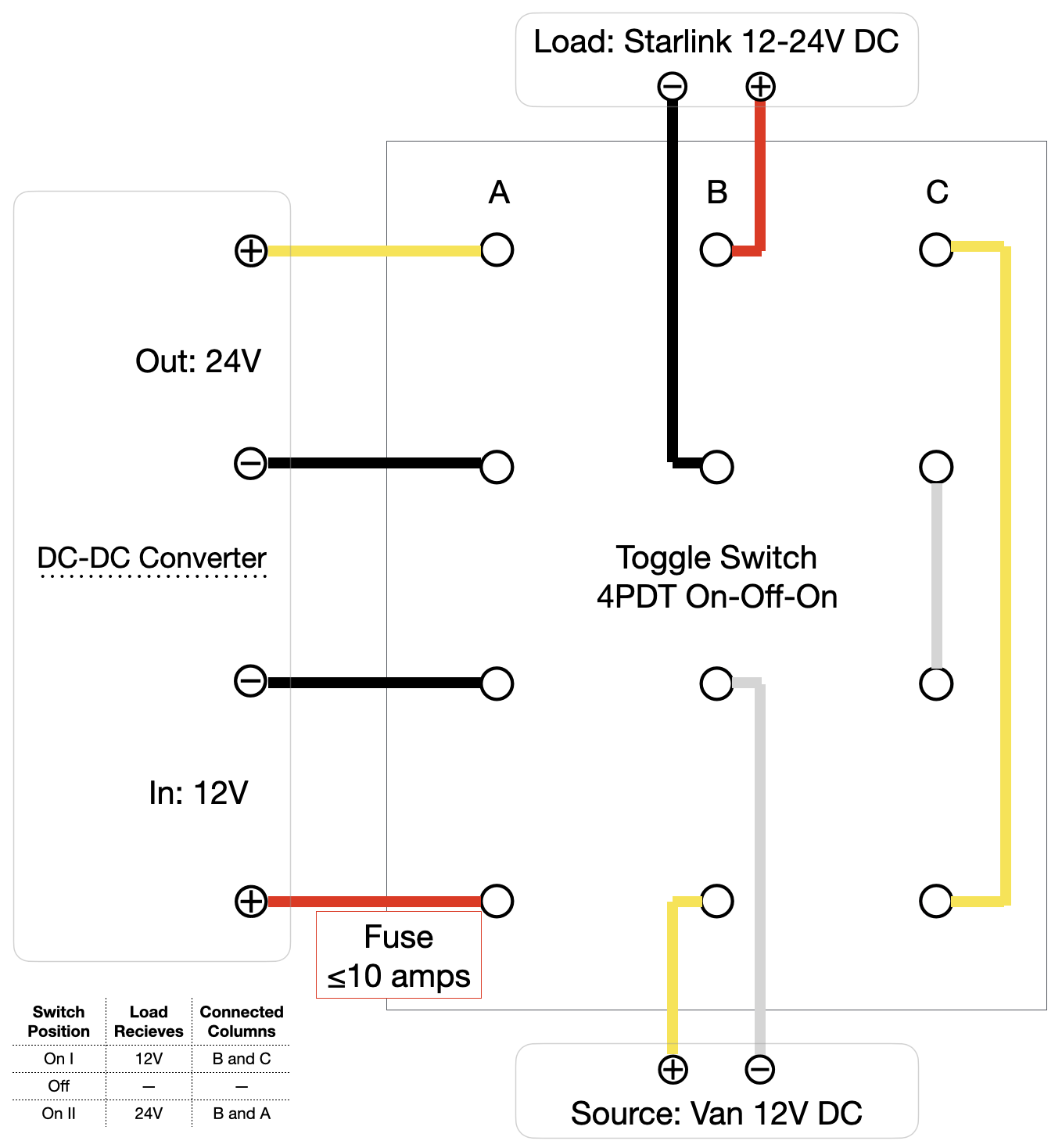
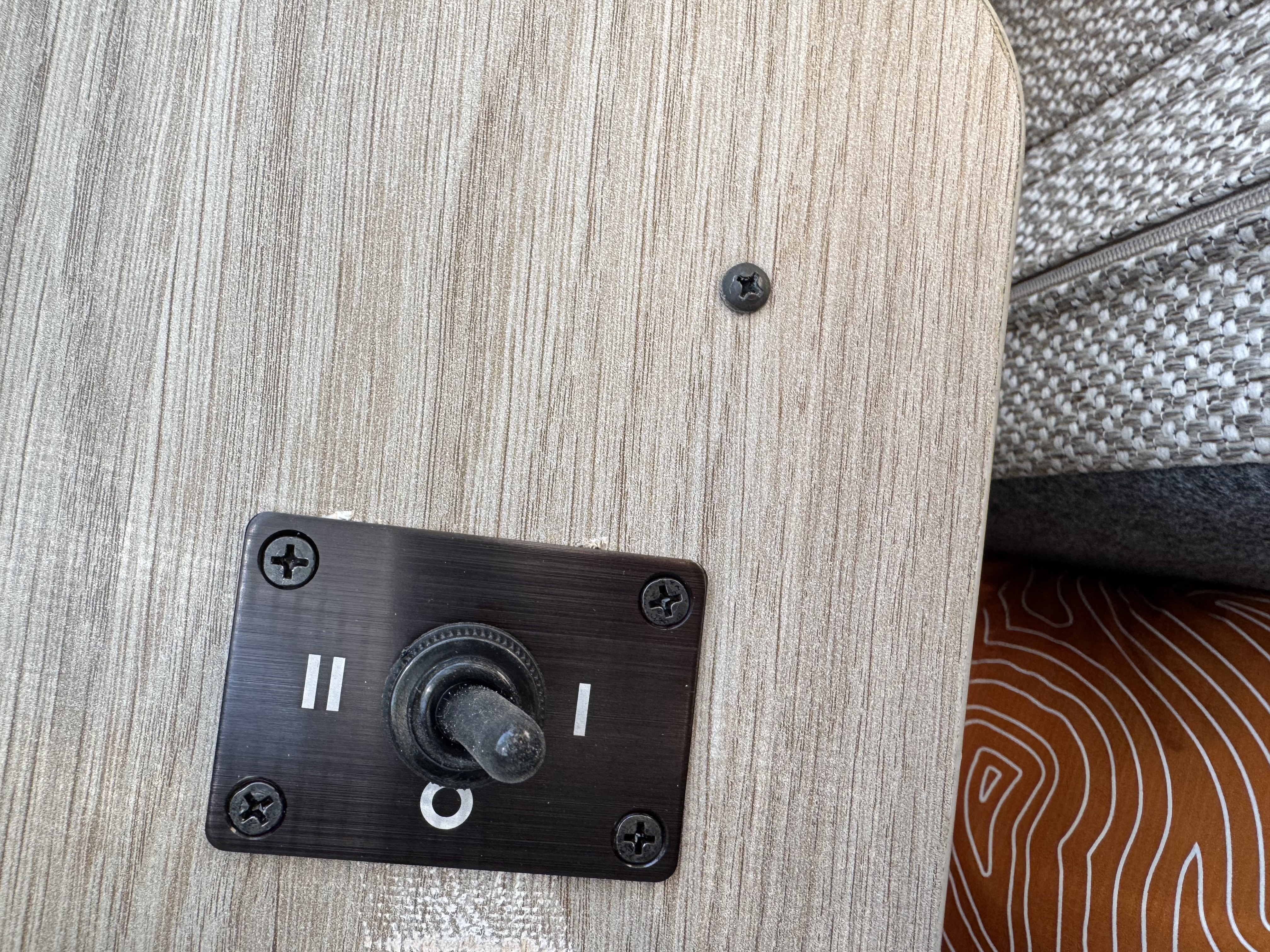
This switch circuit controls power to a Starlink Mini satellite internet router mounted on the roof of this van. It allows the user to: cut power to the unit (Off), power the Starlink by directly passing the van’s house 12V DC power source (On I), or by powering it with 24V via the DC-DC converter (On II).
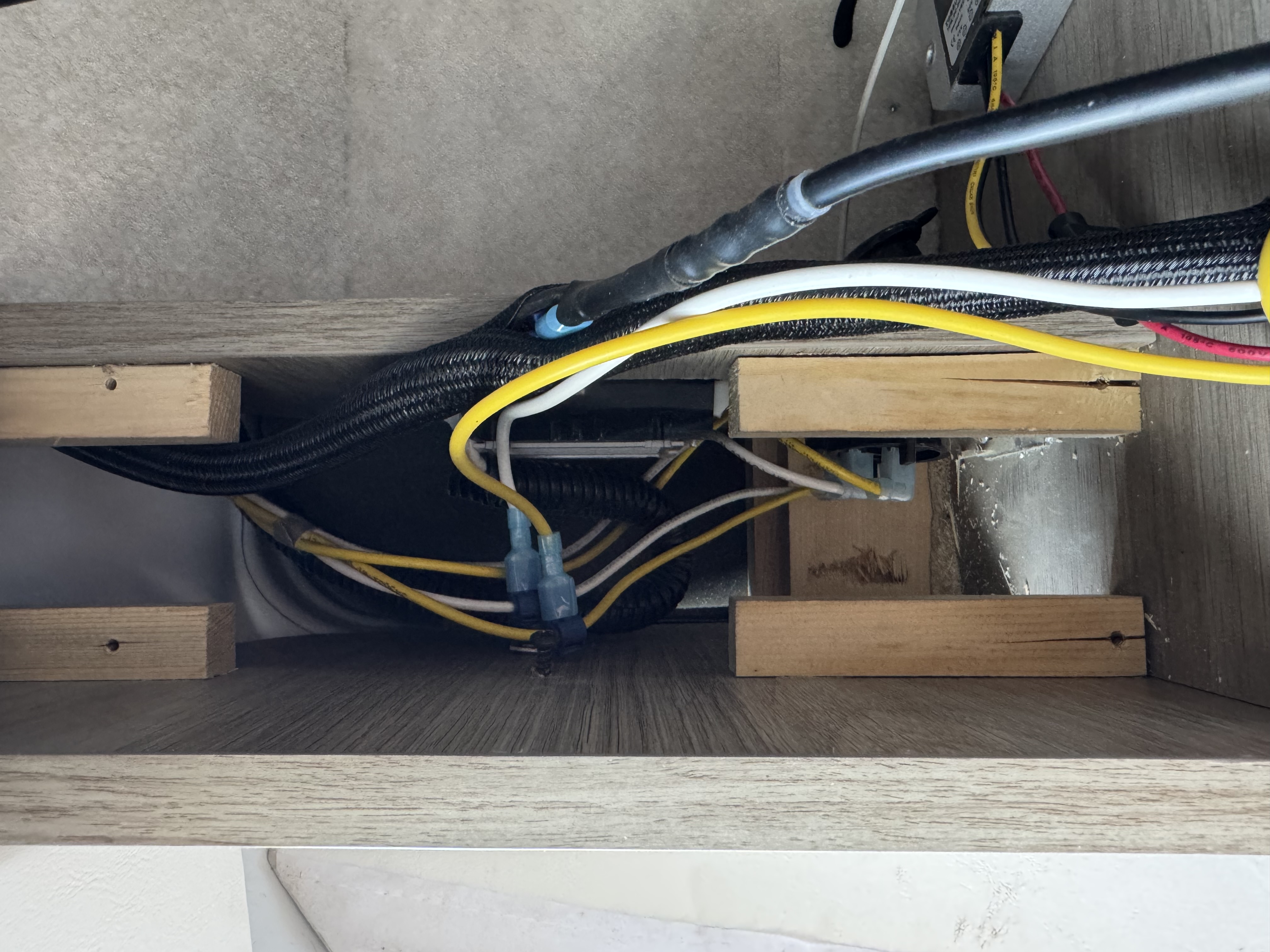
There are two connection options (not shown) branching from the Load pins of the switch. First is a cable that terminates with a Starlink style male 5521 barrel connector, run up into the roof box and penetrates through a cable gland to the outside. This is the default power connection as the Starlink is mounted semi-permanently to the roof. The second option is a weather resistant female barrel port mounted to the van’s bumper, wired down the rear driver side body cavity. This option allows the Starlink to be powered through a male-male cable when it is removed from the roof, which may facilitate better placement for line of sight to the sky.
12V should be sufficient to power the Starlink using the roof cable (typically measures 13V+). When using the bumper port, 24V may be necessary to account for voltage drops due to longer cable runs. The design intention of this circuit was to minimize current drain by powering the DC-DC converter only when necessary.
Okay so everything's in place and I've been running the Starlink for about a week from the roof cable. So far so good. The 12V seems to be holding up just fine. Thinking about it now, I don't feel great that I branched the bumper port off the same line as the roof cable, as being exposed while hot (despite the waterproofing plug) could be prone to shorting. If I were to do this again, I'd simply the circuit with a simple SPDT on-off-on switch on the hot leg only, sending 12V+ to the roof cable OR to the DC-DC converter powering the bumper port.
A few other notes: 1.) Turn off the circuit when you're working on it. Basic right? Well I was feeling lazy while wiring up the switch. As I was craning to screw a cable clamp back, I dropped the screw and of all places, it fell across the positive and negative terminals of the switch and caused a short. I heard that characteristic "click" sound, making note of it. When the usb ports near where I was working weren't providing power, I had a sinking feeling. I went over to the power box and lo and behold, a red light on next to a 15 amp fuse. I pulled the fuse and indeed, it was blown. I replaced it with the same and we were back in business.
2.) The off-brand male-to-male starlink cable I snipped to hard wire in was coaxial, with negative leg on the outer wire braid. This posed a challege for me to terminate it. While some googling suggested i simply straighten the braid and push it all to one side, then crimp it like normal didn't feel great. So another method was to use a solder sleeve butt joint around the exposed outer braid and solder in another wire. So that's what i did. I still don't feel great about my heat gun technique (did I sufficiently melt the solder? did I burn the insulation?), it seems to be holding up ok.
3.) The right tools + parts make a world of difference. Previously I just winged all my crimps and terminations and always wondered why they sucked turns out it was two things: A- I wasn't sizing the cable guage to the terminal properly -- most of the time I would just eye ball it. B- I wasn't using good tools. I thought a crimp was just a dent, so i'd use snips. Later on I used the crimp portion of wire strippers. But getting a ratching crimper was a game changer. The 12V circuit in the Solis is mostly 14 AWG. The roof cable was 16 AWG. And the 5521 barrel port terminates in 18 AWG, and I believe the starlink supplied male to male dc cable is the same. I also got t-tap splice connectors. Despite my original hesitation, they work great. Alos, for the next project I'll get some automatic wire strippers.
4.) Due to my design and experience blowing the fuse, I went back and spliced another fuse upstream the 12V+ leg going to the switch and put a 5 Amp blade in there. This effectively makes the 10 Amp mini blade upstream the DC DC converter useless. It felt right to have the smaller fuse in there given all the stuff I had going on. The starlink shouldn't pull more than 45 watts - so 3.75 amps at 12 volts. I probably should have used a 7.5 amp for the proper safety margin.
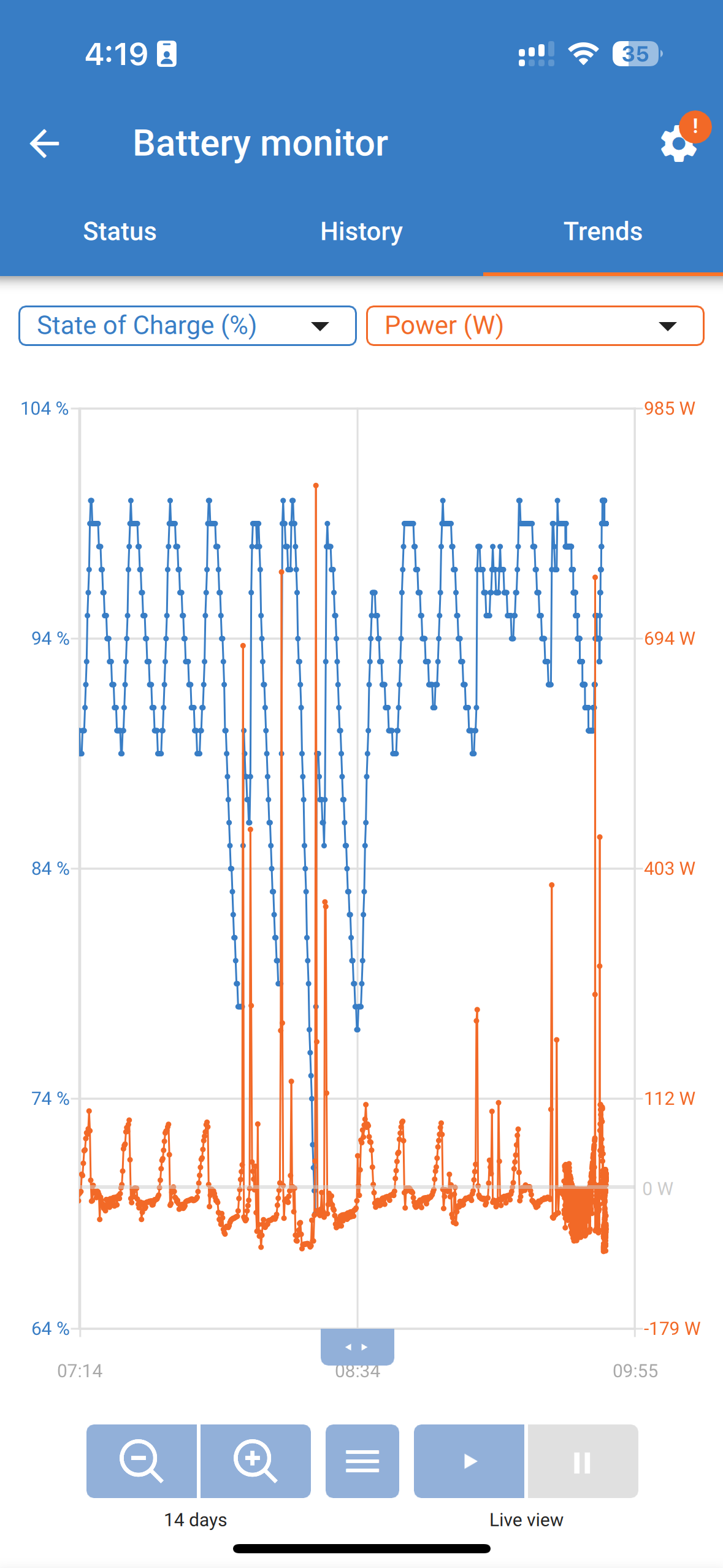
5.) Running the unit all the time does have a signitifant hit on my battery life, overnight SOC used to dip at XX%, now it dips an additional. This was mostly to get data, but it jives. I will just keep the starlink powered off when I know I won't be using it.